


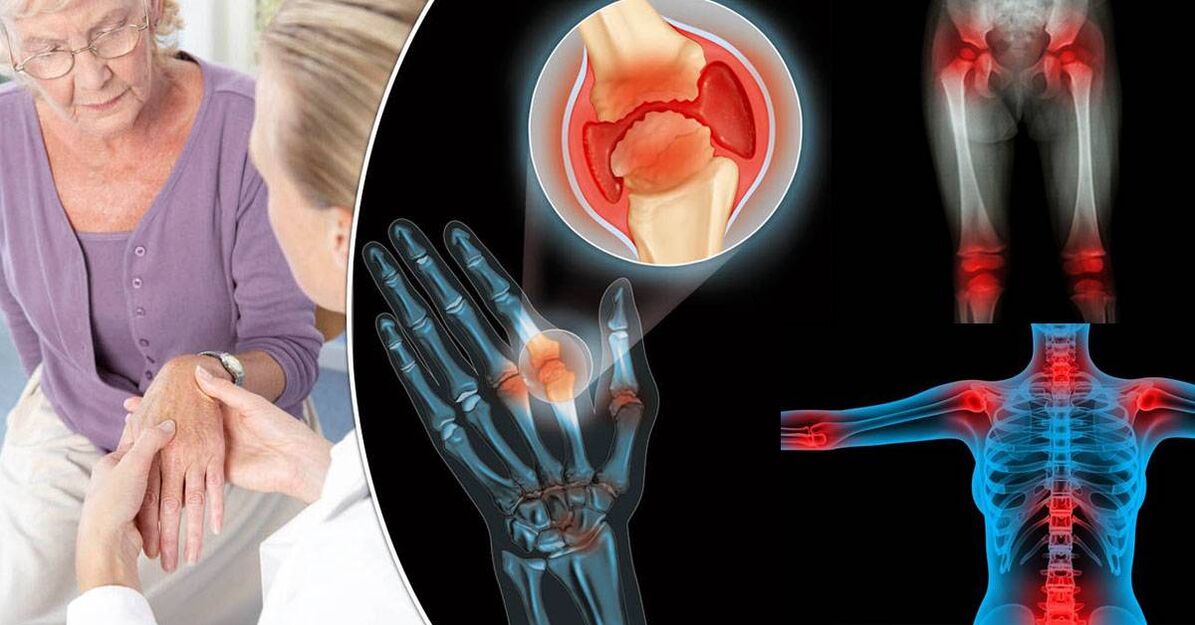
Arthritis of small joints is a disease that destroys the cartilage between joints.The disease affects the joints in the hands, fingers and feet.Osteoarthritis in small joints is less common than in large joints.The disease often develops in old age.
Mechanism of disease development
Arthritis begins with disruption of blood circulation in the subchondral layer of the periosteum.Because of this, cartilage nutrition is impaired, it loses elasticity, becomes thinner and cracks appear.The amount of joint fluid decreases, due to strong friction causing the joints to become inflamed.
Progressive arthritis is very dangerous.If treatment of arthrosis of the arms or legs is not started in time, the joints will begin to take on an unnatural, ugly shape and may lose mobility.
The disease often occurs in women during menopause.Hormone levels in a woman's body change and less estrogen is produced.Because of this, the body loses a lot of moisture, causing cartilage and joints to become more brittle.
Species
Depending on the location, arthritis is of two types:
- hand and finger joints.
- small joints of the foot and big toe.
Arthritis of the hand and finger joints
Arthritis of the hands is common in typists, pianists, programmers and secretaries.The disease affects the intercostal joints.When you have arthritis in your fingers, the joint tissues become dry and cracked.Small spots under the skin often appear in the joints of the hands.Usually they don't disappear anymore.
As the disease progresses, bone tissue becomes denser and tumors appear on it.They cause severe pain when moving your fingers.In severe cases, a person loses the ability to move their hands and fingers.
Symptoms of the disease: cracking of the joints when moving the fingers, pain in the fingers after exercise, tightness of the finger joints, swelling of tissue around the joints.
Arthritis of the foot
Ballerinas, dancers, gymnasts, wrestlers, and jumpers are susceptible to foot arthritis.The disease affects the toe joints.Bone spurs appear in the small joints of the feet.Because of them, it is very painful for a person to move his legs.As the disease progresses, the deformation of the joints is very noticeable and the patient is practically unable to move his feet.
Osteoarthritis of the big toe is the most common type of arthritis in the foot.When the disease occurs, a “bone” will form in the thumb joint area.Osteoarthritis of the big toe occurs due to wearing tight shoes.
Symptoms of foot arthritis: foot pain after physical activity, cracking of the joints when moving, increased joint size.When walking, the person limps and leans on the outer edge of the foot.
Cause it happened
Arthritis can be primary or secondary.
Primary arthritis occurs due to problems in joint cartilage tissue, specifically:
- genetic disorders in the composition of articular cartilage tissue;
- joint hypermobility;
- dysplasia, flat feet, wide feet.
Secondary arthritis results from joint damage and other diseases.Among its reasons:
- trauma, microtrauma of joints;
- acute and chronic arthritis, synovitis;
- metabolic disorders, lack of calcium, phosphorus and other minerals;
- gout, psoriasis, rheumatoid arthritis;
- diabetes and other diseases of the endocrine system.
Risk factors
Risk factors for the disease include:
- genetic predisposition;
- Hard manual labor, heavy load on the finger joints;
- being overweight, drinking too much alcohol;
- wearing tight, uncomfortable high heels for long periods of time;
- sedentary lifestyle;
- hypothermia in the feet.
If your work often puts stress on the joints of your fingers and toes, or you have a relative with minor osteoarthritis, you should think about prevention.We will talk about it at the end of the article.
Symptom
Among the signs of arthritis of the small joints in the feet, fingers and hands:
- pain in the limbs, lessen or arise again;
- painful finger or toe movements;
- joints swell, bend and straighten with a “crunch” sound;
- the tissues surrounding the joint become inflamed;
- the shape of the joints changes - they thicken, Heberden and Bouchard nodes appear;
- Fingertip sensitivity decreased.
Stages of small joint arthritis
There are three stages of the disease.
- The initial stage of the disease is accompanied by periodic pain in the joints of the fingers or toes during movement or active work.The pain gradually subsides after resting.Joints may begin to crack and swelling may form near them.
- Second stage of arthritis.As the disease progresses, the pain increases and becomes constant.Moving your fingers causes pain.Heberden and Bouchard nodes form at the joints.Their appearance is accompanied by a burning sensation and pain.After a few months, the redness and swelling disappear and the nodules become hardened.
- The third stage of rheumatoid arthritis is the most serious.The fingers and toes are deformed and almost impossible to move.The area around the affected joint becomes red and swollen.Sharp pain in the joints is felt not only when moving, but also when resting.A person who has difficulty walking makes going up and down stairs a challenge for him.
Diagnose
If you notice symptoms of arthritis in small joints, don't delay seeing a chiropractor.The disease can be cured in the early stages.In the second and third stages, you can only slow down its development.
To diagnose arthritis in small joints, a comprehensive study is required.With its help, the doctor will determine the cause of the disease and prescribe effective treatment.Initial appointments are made by neurologists and orthopedists.They accurately diagnose arthritis in the joints of the arms and legs using the following methods:
- MRI.Magnetic resonance imaging
- Ultrasound examination (ultrasound)
- Measure density
- Electrocardiogram (ECG)
- Monitor ECG daily
- Comprehensive physical examination (check-up)
- Analysis of the body's bioimpedance as part of the "Smart Weight Loss" program
- Laboratory research
How we treat small joint arthritis
An integrated approach is the best way to deal with this disease.Our doctors treat arthritis in small joints non-surgically.They stop the development of diseases and heal the entire body.
The primary doctor prescribes an individual course of treatment for the patient, taking into account the cause of joint disease, condition, age, gender and characteristics of the patient's body.Treatment of arthritis in the small joints of the feet, hands and fingers will take up to a month and a half.Patients undergo procedures 2-3 times a week.The pain in your joints will disappear after the first week of treatment.The treatment includes the following procedures:
- Percussion-vibration therapy on the device
- High intensity magnetic therapy
- Isometric movement therapy using the Pilates method
- UHF resonance wave therapy
- Fermatron injection
In-office treatment of small joint arthritis helps relieve joint pain and inflammation.Blood circulation and nutrition of the patient's cartilage improve, and the destruction of cartilage and joint tissue is stopped.Your doctor will advise you on what you can do on your own to prevent the disease.
prevent
Doctors at Health Workshop advise avoiding joint problems:
- walk more, run, swim, water aerobics, ski;
- Don't let it get too cold;
- track your weight;
- avoid joint injuries;
- Walk in comfortable shoes.
When it comes to nutrition, we recommend that you adhere to the following principles:
- eat lots of avocado, grapefruit, kiwi;
- Limit consumption of tomatoes and legumes;
- include cartilage, gelatin, garlic in your diet;
- eat less fatty and fried meat, sugar, chocolate, coffee, cookies;
- give up smoking and alcohol;
- Drink at least two liters of water every day.
Massage therapy
To prevent hand and finger arthritis, do the following exercises:
- Rub your palms together.
- Rub the fingers of one hand with the fingers of the other hand, first in the direction from the base to the nail and in the opposite direction.
- Bend and straighten your fingers 10 times without clenching them into a fist.
- Press your palms firmly and press the fingers of one hand against the fingers of the other hand.
- Separate your palms and continue pressing your fingers together.